AADE Commentary: How the US Federal Communications Commission's Ban on Chinese Testing Labs Reshapes the Technology Contest
November 5, 2026 | Singapore
In an opinion piece published in the South China Morning Post on November 5, 2026, Tan Poh Hwee, President of the Asia Academy of Digital Economics (AADE), argues that the latest front in the US-China technology contest is not advanced chips, artificial intelligence (AI) or telecommunications equipment, but the laboratories that certify whether an electronic product may enter the American market.
The Latest Front Is the Testing Lab
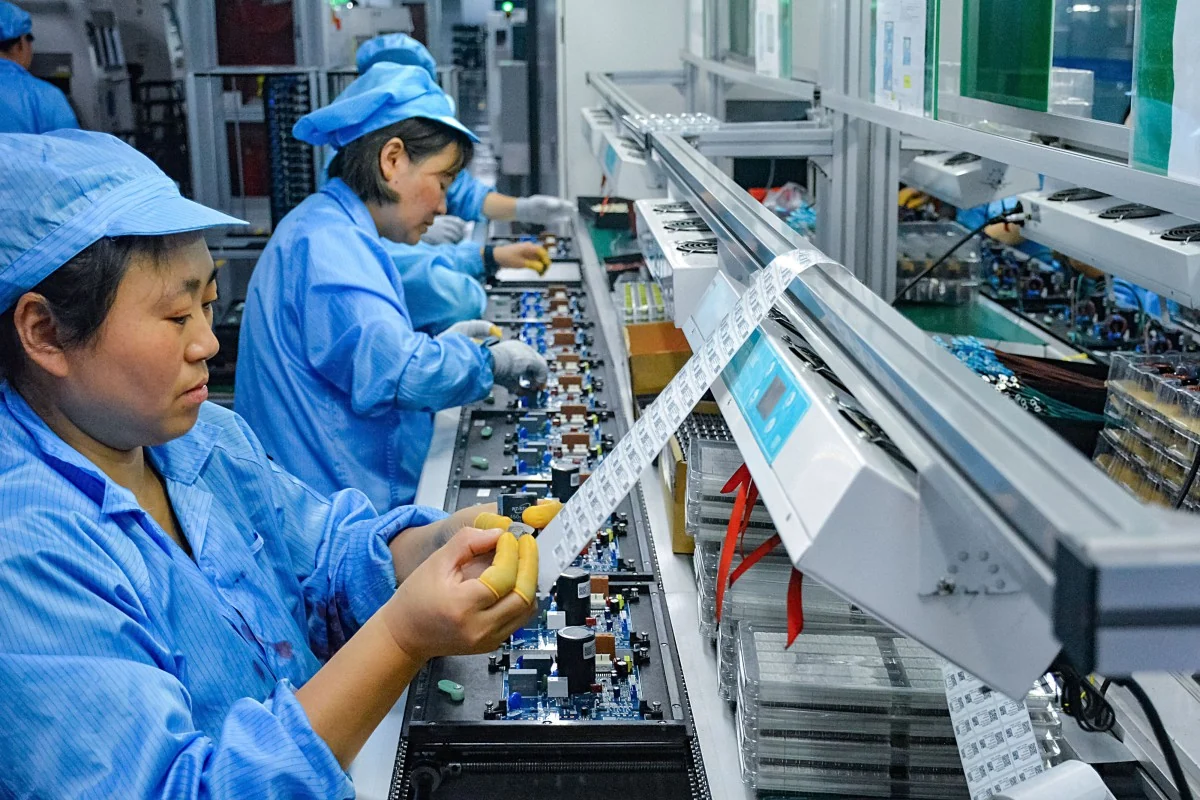
Workers produce electronic products for export at a workshop in the Yuexi Economic Development Zone, in China's Anhui province on September 9. Photo: NurPhoto via Getty Images
On October 29, the US Federal Communications Commission (FCC) voted to stop recognizing testing laboratories, telecoms certification bodies and accreditation organizations in China and in other economies that lack a "mutual recognition agreement" or comparable reciprocal arrangement with the United States. The restrictions take effect on December 1, 2028. FCC Chairman Brendan Carr cited a striking statistic: last year, about 82 percent of US equipment-authorization applications were associated with testing firms in China, while fewer than 4 percent involved testing in the US. Tan notes that the figure is politically powerful, and that it also explains why Washington is acting.
FCC Chairman Brendan Carr speaking at a press conference in Washington on July 22. Photo: Reuters
AADE President Tan Poh Hwee's Four Key Points
Tan's commentary examines the motivations behind the rule, its costs, and what it means for China. His main arguments are:
Firstly, the US is sidelining Chinese testing labs to mitigate strategic dependencies, regain regulatory oversight against falsified results, and boost its domestic industry through reciprocal policies.
Secondly, decoupling testing from production creates costly logistical delays. While large multinationals can absorb the expense of prototypes repeatedly crossing borders, smaller exporters will struggle, though this alone won't necessarily drive manufacturing back to the US.
Thirdly, beyond the immediate financial hit to local testing institutions, the deeper threat to China is the fracturing of its integrated design-to-production ecosystem as high-value compliance and engineering functions migrate overseas.
Finally, this exposes China's strategic vulnerability in export certification. As technical approval becomes a new bottleneck in the tech rivalry, China must build transparent and independently auditable testing practices—market access now fundamentally relies on institutional credibility.
To read the full commentary, please visit the South China Morning Post article.