
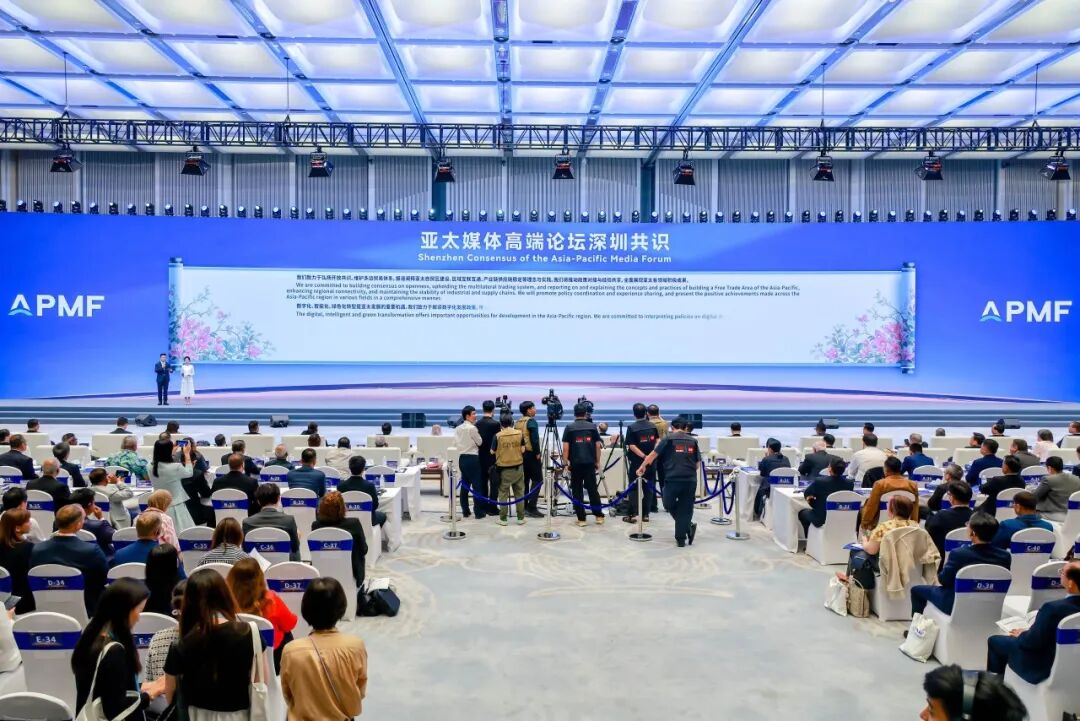
As an official high-level event under the Asia-Pacific Economic Cooperation (APEC) China 2026 framework, the Asia-Pacific Media Forum convened in Shenzhen, China, under the theme "Building a Prosperous Asia-Pacific Community: Media Consensus and Action." The forum was co-hosted by China's Publicity Department of the Central Committee of the Communist Party of China (CPC), China's Xinhua News Agency, and the People's Government of Guangdong Province, China, and organized by the Shenzhen Municipal People's Government, China. The gathering brought together over 400 representatives from more than 40 countries and regions, representing international media networks, think tanks, and government institutions.
Shaping Regional Discourse Ahead of APEC 2026
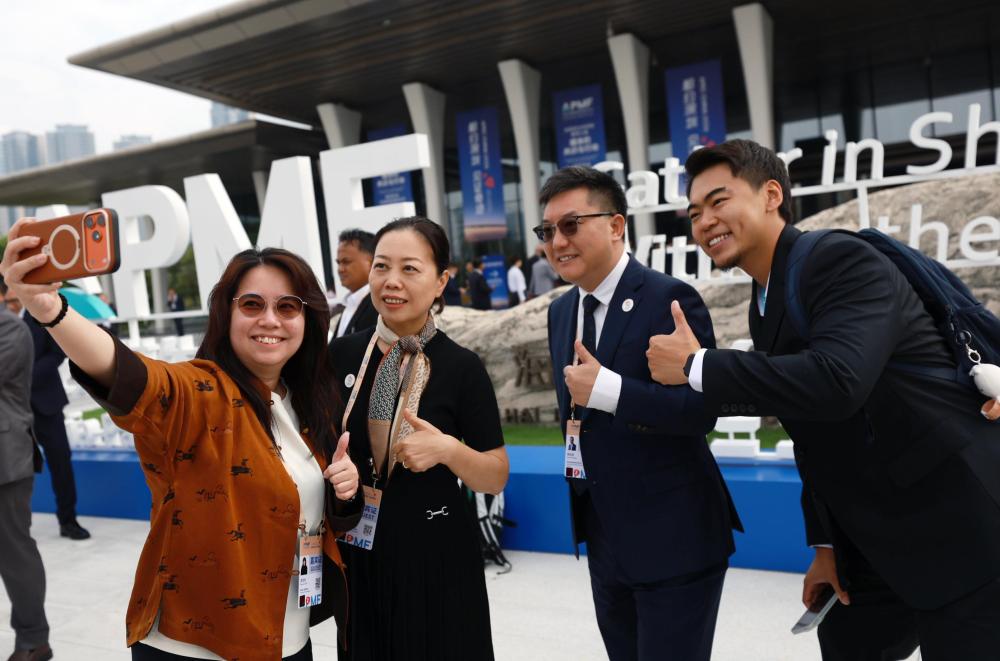
Among the institutional participants, a delegation from the Asia Academy of Digital Economics (AADE) attended the forum as a think tank representative, contributing research perspectives on regional digital economic development and cross-border cooperation. The AADE delegation engaged with senior executives and editorial leaders from major international media organizations, including Kostas Iconomu, Senior Vice President of Cable News Network (CNN), and Lee Huay Leng, Editor-in-Chief of the Chinese Media Group at Singapore's SPH Media Trust (SPH Media). Prior to the plenary sessions held on September 5 at the Qianhai International Conference Center in Shenzhen, delegates participated in multi-day field visits across key industrial hubs in the Guangdong-Hong Kong-Macao Greater Bay Area (GBA) to observe advanced manufacturing, electronics innovation, and urban development firsthand.
Rethinking AI and Industrial Cooperation in the Greater Bay Area
Speaking across a series of high-level panels hosted by leading Chinese financial and metropolitan publications—including Southern Metropolis Daily, the 21st Century Business Herald, and a feature interview with Southern Weekly—Tan addressed the structural intersections of artificial intelligence, cross-border commerce, and regional governance.
Addressing AI's expanding footprint in content generation, Tan observed that while Chinese mainstream media hold natural advantages in data volume, multi-platform infrastructure, and rapid technological deployment, the primary bottleneck in international communication is no longer production speed. Instead, the core challenge lies in cultural interpretation and credibility. He recommended transparent labeling of AI-assisted outputs, the curation of high-quality copyright-clear archives, and a strategic pivot toward collaborative, localized storytelling.

At the Shenzhen sub-forum, Tan highlighted the city's core strength as an institutional "interface" capable of synchronizing technology, capital, and talent, arguing that Shenzhen's next evolution must transition from building physical product supply chains to establishing robust "trust supply chains." Expanding on this theme in subsequent discussions regarding Greater Bay Area and Singapore collaboration, he cautioned against reducing bilateral ties to simple trade patterns. Real economic resilience, he noted, requires joint needs-definition and risk-sharing across priority sectors such as smart manufacturing, cross-border data services, and green technology.