

Explore the Summit in Data 点击查看 DEAI 2026 峰会可视化数据报告
Speakers, diplomatic representation, audience composition, media reach and key takeaways — the full DEAI 2026 International Summit at a glance.
View the Full Report 查看完整报告Singapore, May 19, 2026 — The Digital Economy Action Initiative 2026 International Summit (DEAI 2026), organised by the Asia Academy of Digital Economics (AADE), was held at the Shaw Foundation Alumni House of the National University of Singapore.
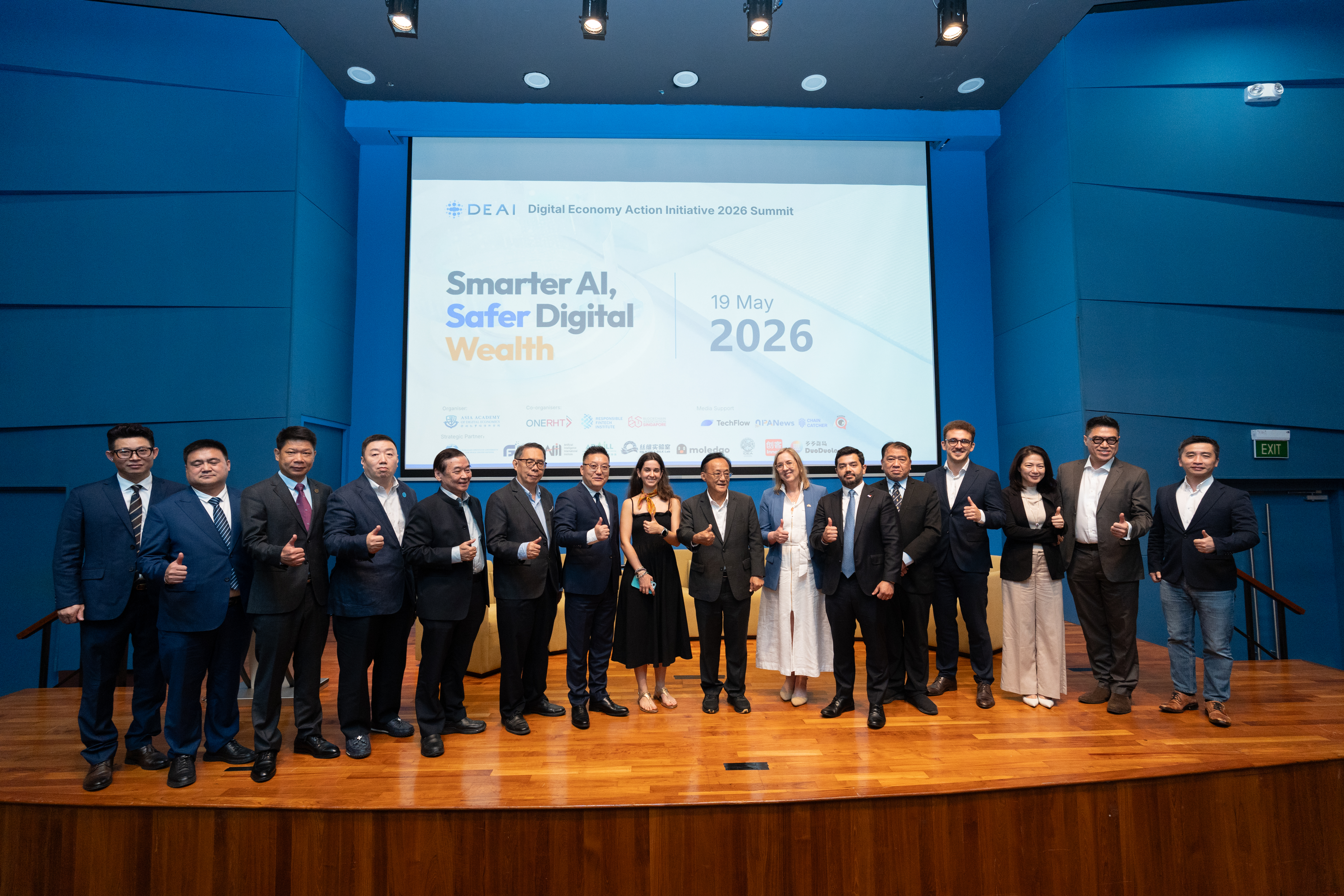
Convened under the theme "Smarter AI, Safer Digital Wealth," the summit responded to a moment in which AI has moved from descriptive tool to executable agent operating at machine speed across financial markets, a shift that intersects directly with the rapid growth of digital assets through tokenisation, stablecoins and programmable finance. The summit brought together senior representatives from Visa, HashKey, StraitsX, Standard Chartered Bank, the Monetary Authority of Singapore (MAS), SBI Digital Markets, QCP, RHTLaw Asia and others.
High-Level Parliamentary, International Security and Diplomatic Representation
The summit was honoured by the presence of Mr Seng Han Thong, Former Member of Parliament and Chief Adviser of AADE, and Dr Neo Kok Beng, Nominated Member of Parliament and Principal Scientist of AADE.
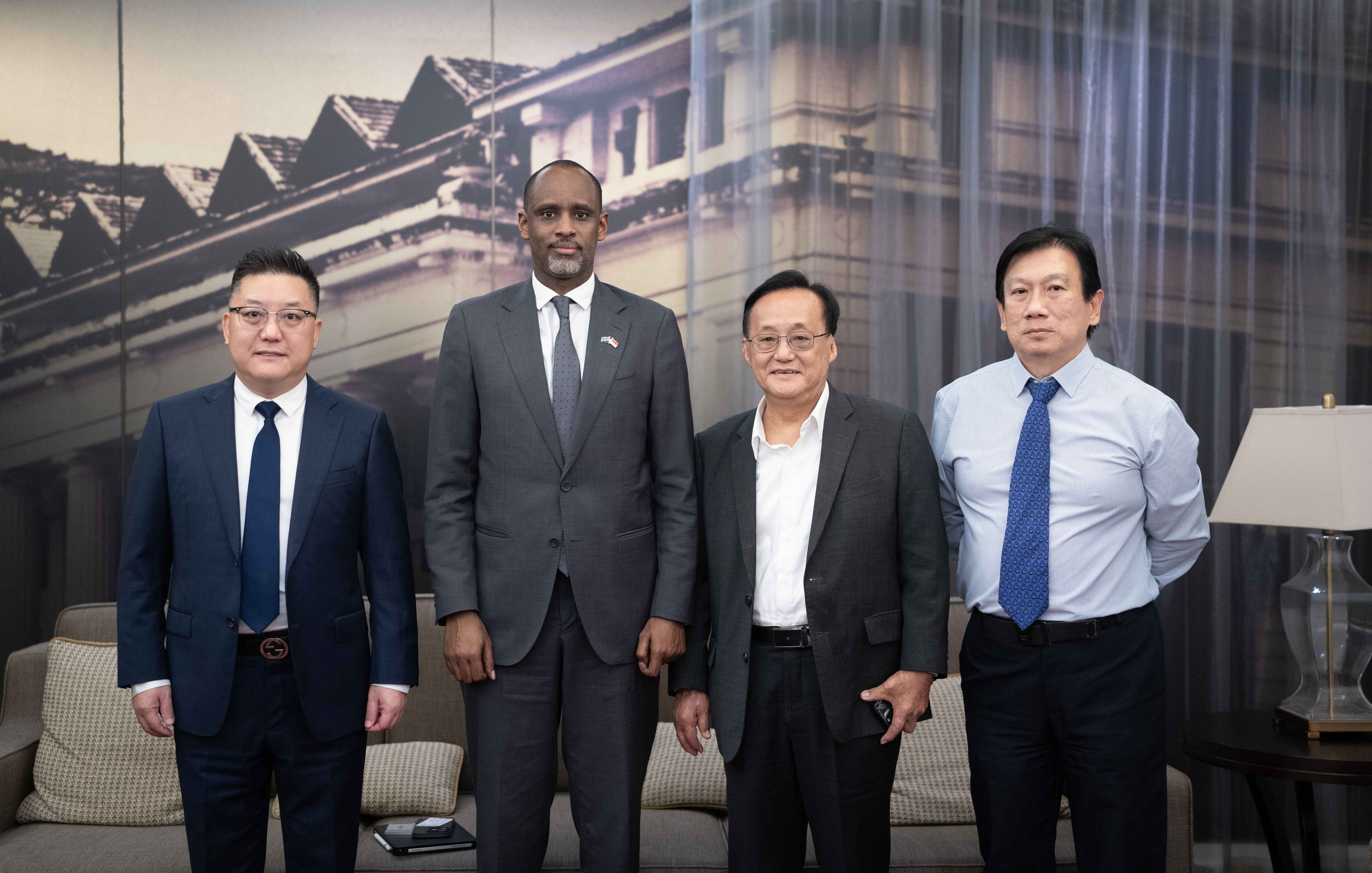
Reflecting the international priority of AI and digital assets governance, the summit also welcomed representatives from the diplomatic missions of nine nations:
- H.E. Mr Sebastian Breton, Ambassador, Embassy of Panama in Singapore
- H.E. Mr Innocent B. Muhizi, High Commissioner of the Republic of Rwanda to Singapore
- Mr Graham Hartnett, Deputy Head of Mission, Embassy of Ireland in Singapore
- Miss Nicole Ledoux, Deputy Head of Mission, Embassy of the Republic of Chile in Singapore
- Ms Katrina Lourie, Counsellor (Economic), Australian High Commission, Singapore
- Mr Umar Jahangir, Trade and Investment Counsellor, Pakistan High Commission, Singapore
- Mr Aniket Patankar, First Secretary (Political), High Commission of India, Singapore
- Mr Juan Diego Pacheco Carretero, International Trade and Investment Analyst, Embassy of Spain in Singapore
- Ms Carlota López Arribas, Analyst, Embassy of Spain in Singapore
- Ms Ornella Kayitesi, First Secretary in charge of Economic & Political Affairs, High Commission of the Republic of Rwanda to Singapore
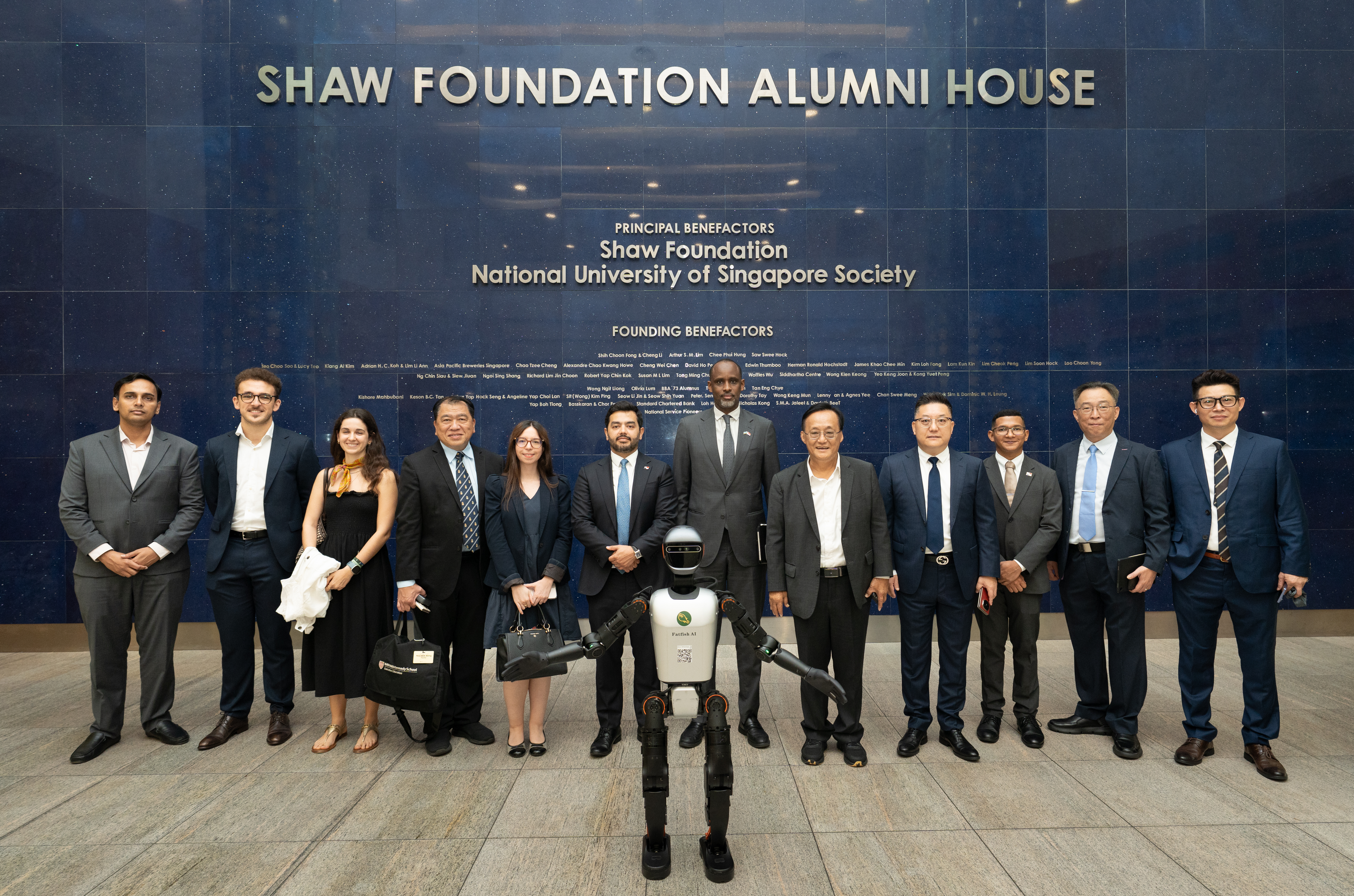
Underscoring the law-enforcement dimensions of the digital economy, the summit also featured Dr Sungyong Kang, Criminal Intelligence Officer at the Financial Crime and Anti-Corruption Centre of INTERPOL, the world's largest international police organization.
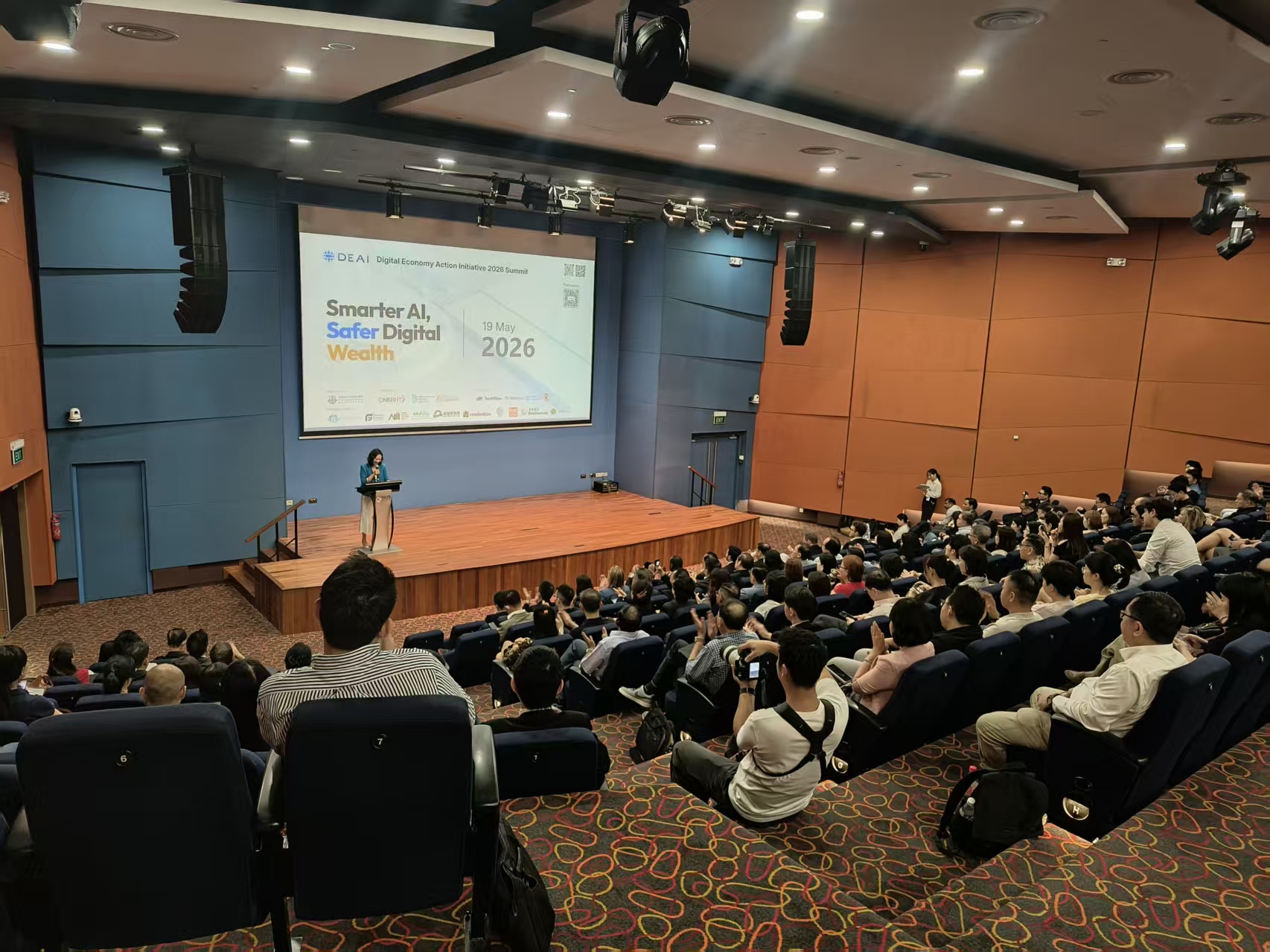
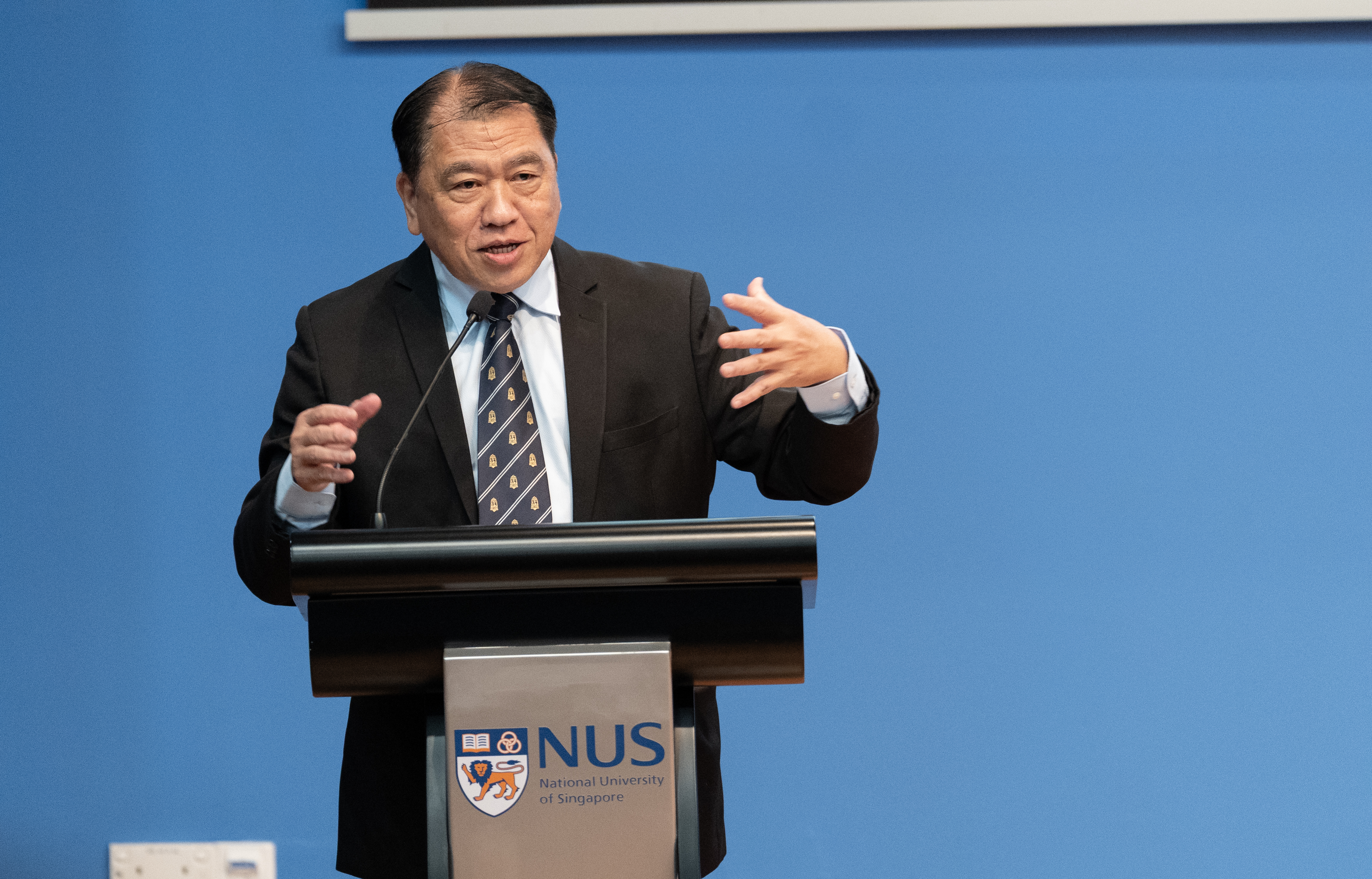
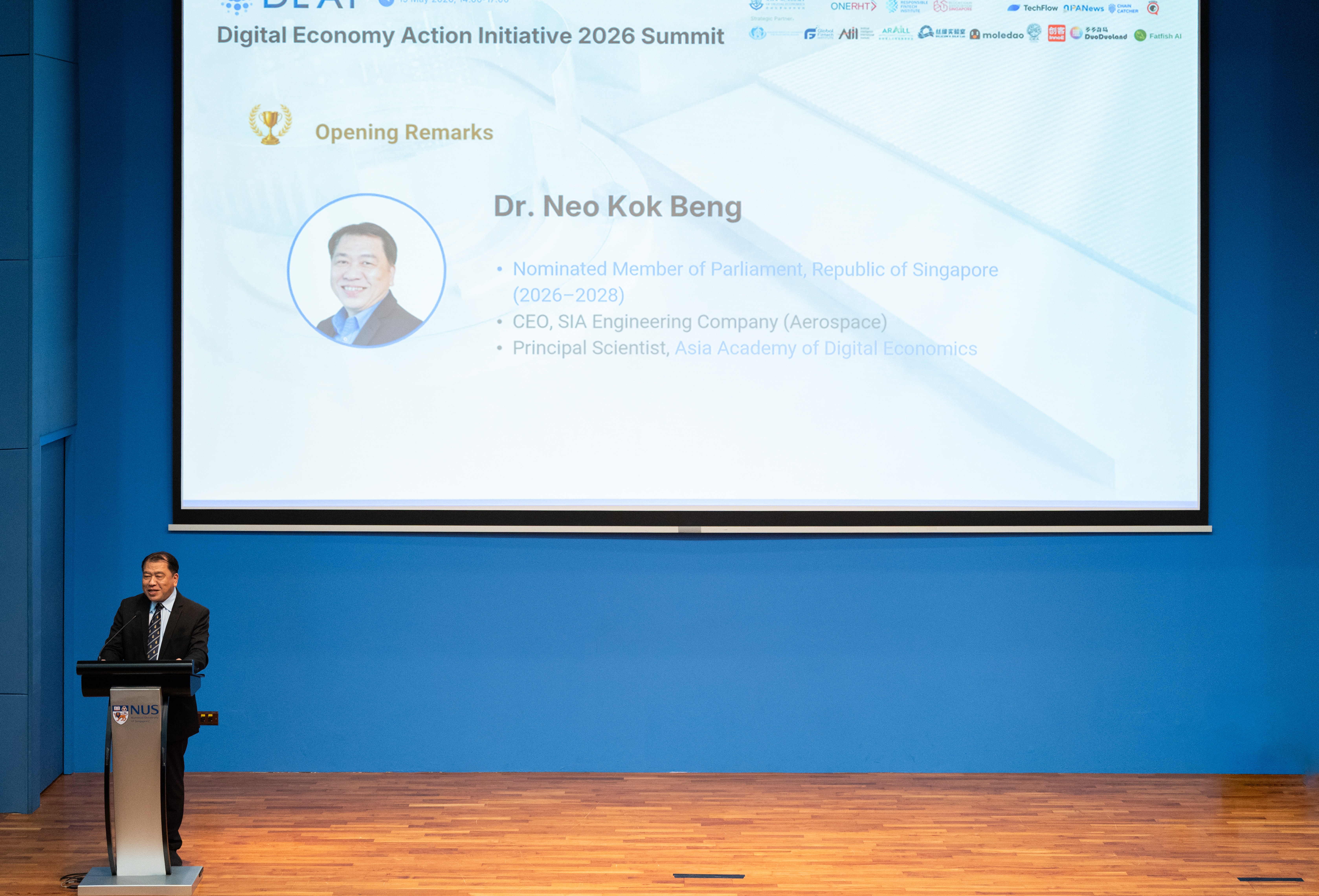
Opening Address — "Trust as Singapore's Enduring Connector"
Dr Neo Kok Beng, Nominated Member of Parliament and Principal Scientist of AADE, delivered the opening address. Referencing Singapore's Economic Strategy Review and its emphasis on global leadership in emerging technologies and on building a global AI hub, Dr Neo argued that Singapore's most enduring asset in an AI-driven economy is not infrastructure scale but trust — trust that the country will honour its agreements, adhere to its principles, and remain a well-connected, resilient hub through which talent, capital and innovation can flow.
Keynote Block I — Governing AI, Defending Web3, Rebuilding the Enterprise
Mr David Hardoon, Former Global Head of AI Enablement at Standard Chartered Bank and Former Chief Data Officer at the Monetary Authority of Singapore, delivered the first keynote on AI governance under conditions of regulatory abundance. Noting that the OECD now tracks more than 900 national AI governance frameworks across 18 jurisdictions, he argued the industry has shifted from a "landscape of scarcity to one of abundance," with fragmentation, conflicting frameworks and decision fatigue now the central risk. He proposed treating AI governance as continuous, telemetry-based monitoring across observability, controllability, stability, robustness and performance — and applying the same unified governance to human and AI agents alike, to avoid a "double standard" in which AI is held to ideals that human operations have already risk-accepted.
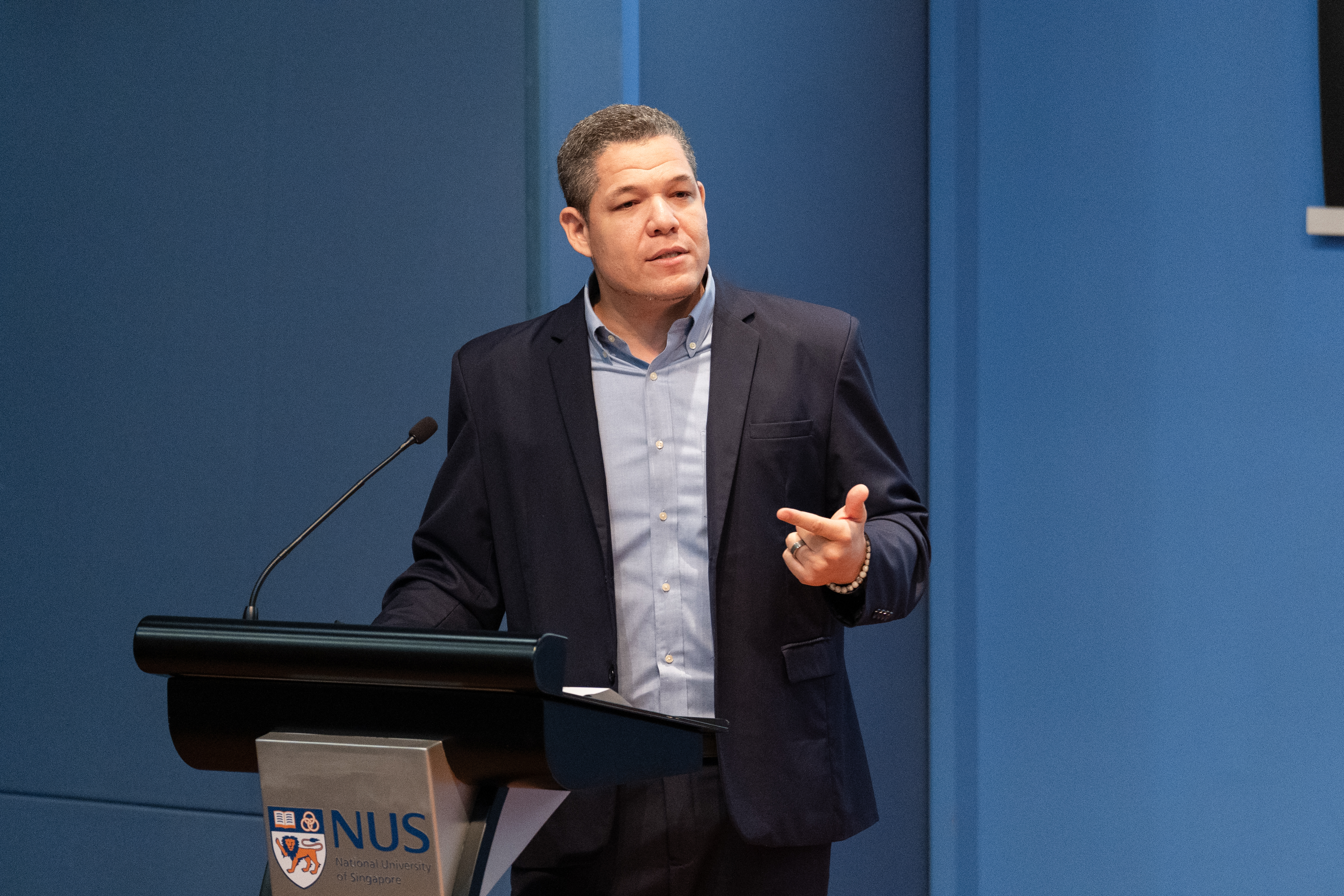
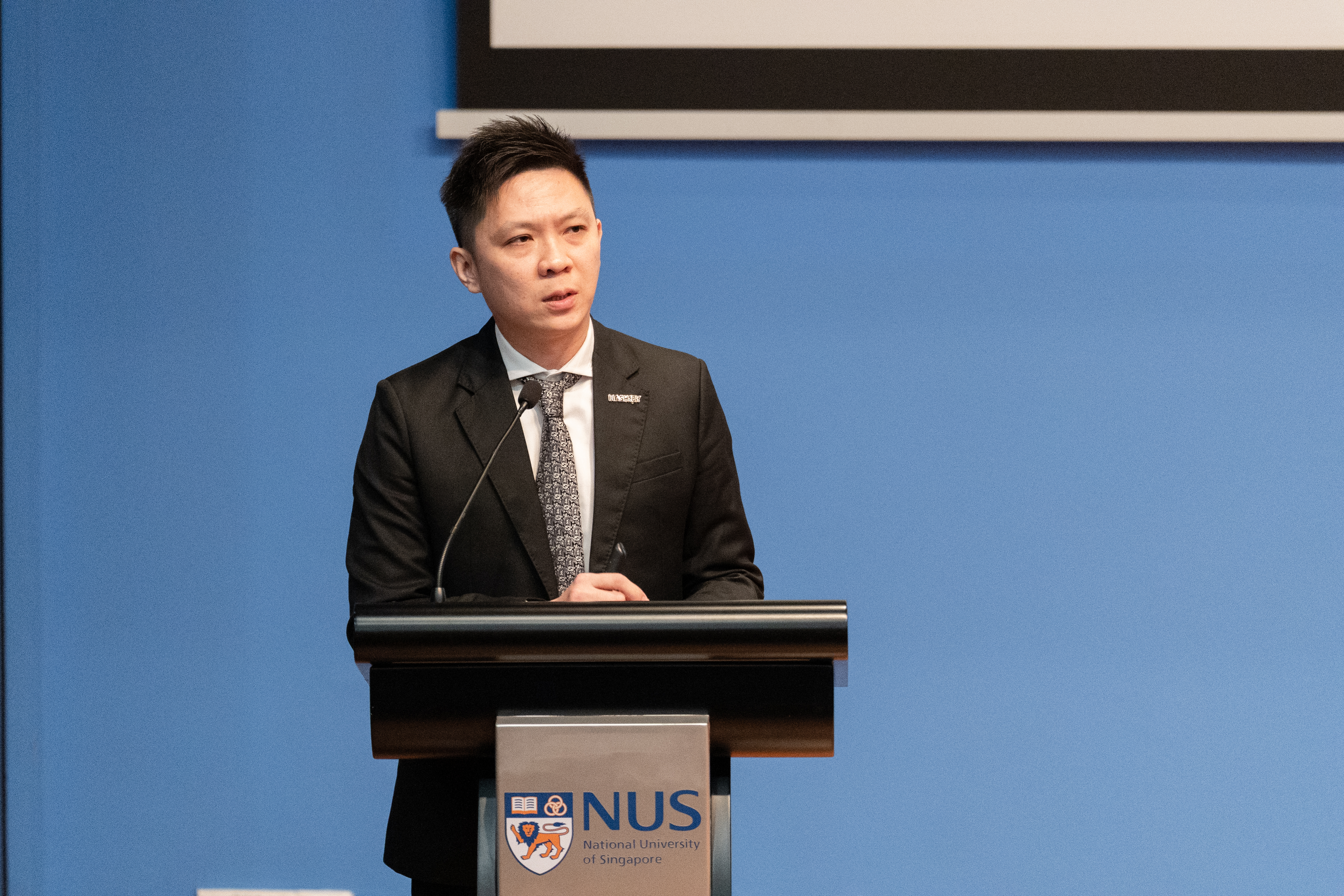
Mr Jason Tay, CEO of HashKey OTC Singapore, followed with a keynote on Web3's autonomous AI arms race. He cited industry data showing Web3 exploit losses of US$464 million in Q1 2026 — the lowest quarterly figure since 2023, and one increasingly distributed across mid-sized incidents rather than single catastrophic events. He noted that autonomous agents now operate on both sides: AI-augmented auditing tools can identify up to 85% of common smart-contract vulnerabilities before deployment, while attacker bots execute zero-day exploits, fuzzing and MEV front-running at sub-second speed. His central argument was that defenders cannot win a machine-speed architectural war with manual oversight, and that Web3 security must evolve from reactive bot-versus-bot conflict toward shared, self-healing "biological immune system" protocols.
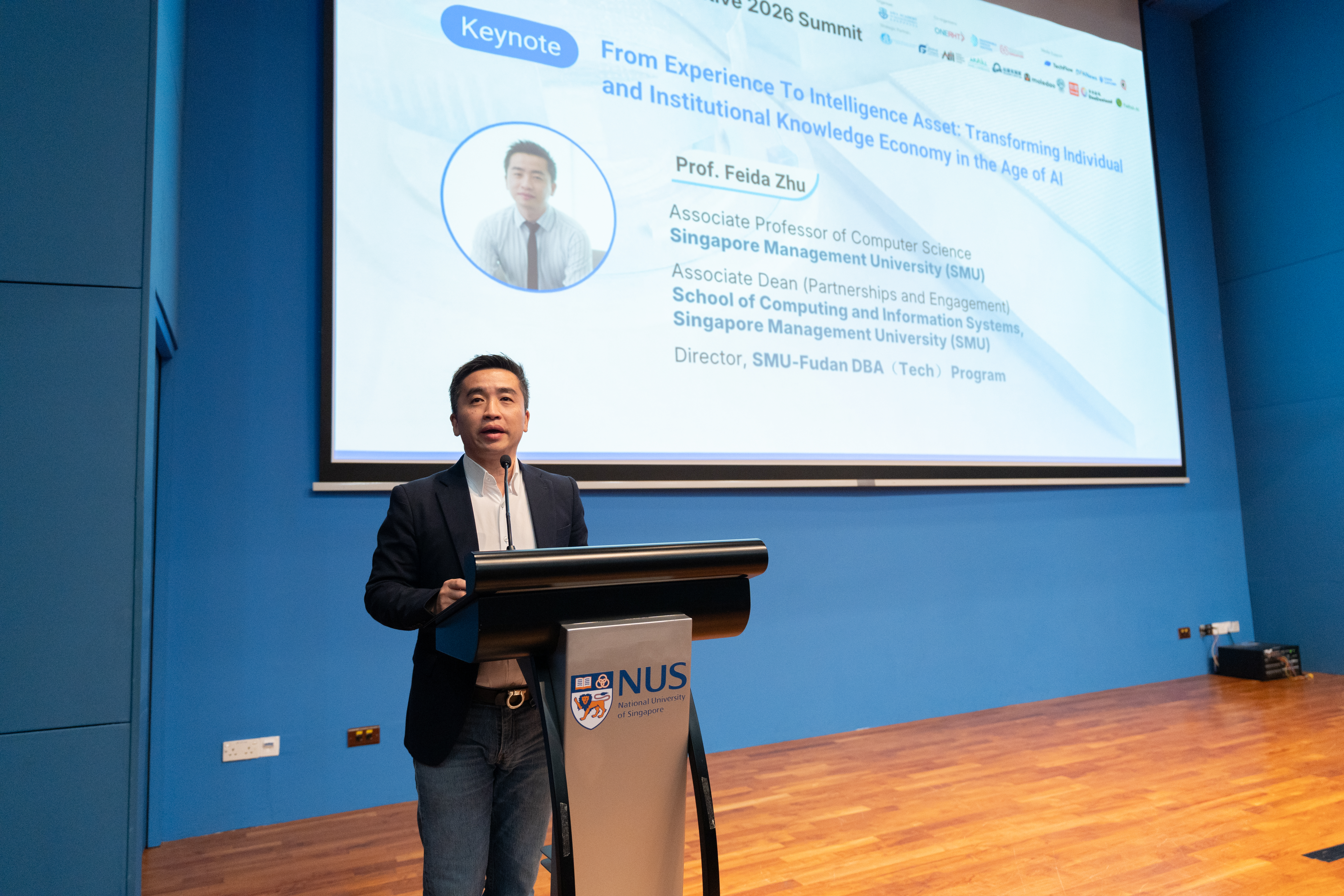
Professor Zhu Feida, Associate Professor of Computer Science and Associate Dean at Singapore Management University, closed the morning keynotes with a talk on transforming enterprise experience into intelligent assets. He observed that in some leading firms, 30–40% of operational work is already being absorbed by digital twins of former employees, raising new questions around employee value assessment, privacy and dignity, knowledge ownership, workforce design and organisational trust.
Panel A — AI, Web3 and Finance Symbiosis
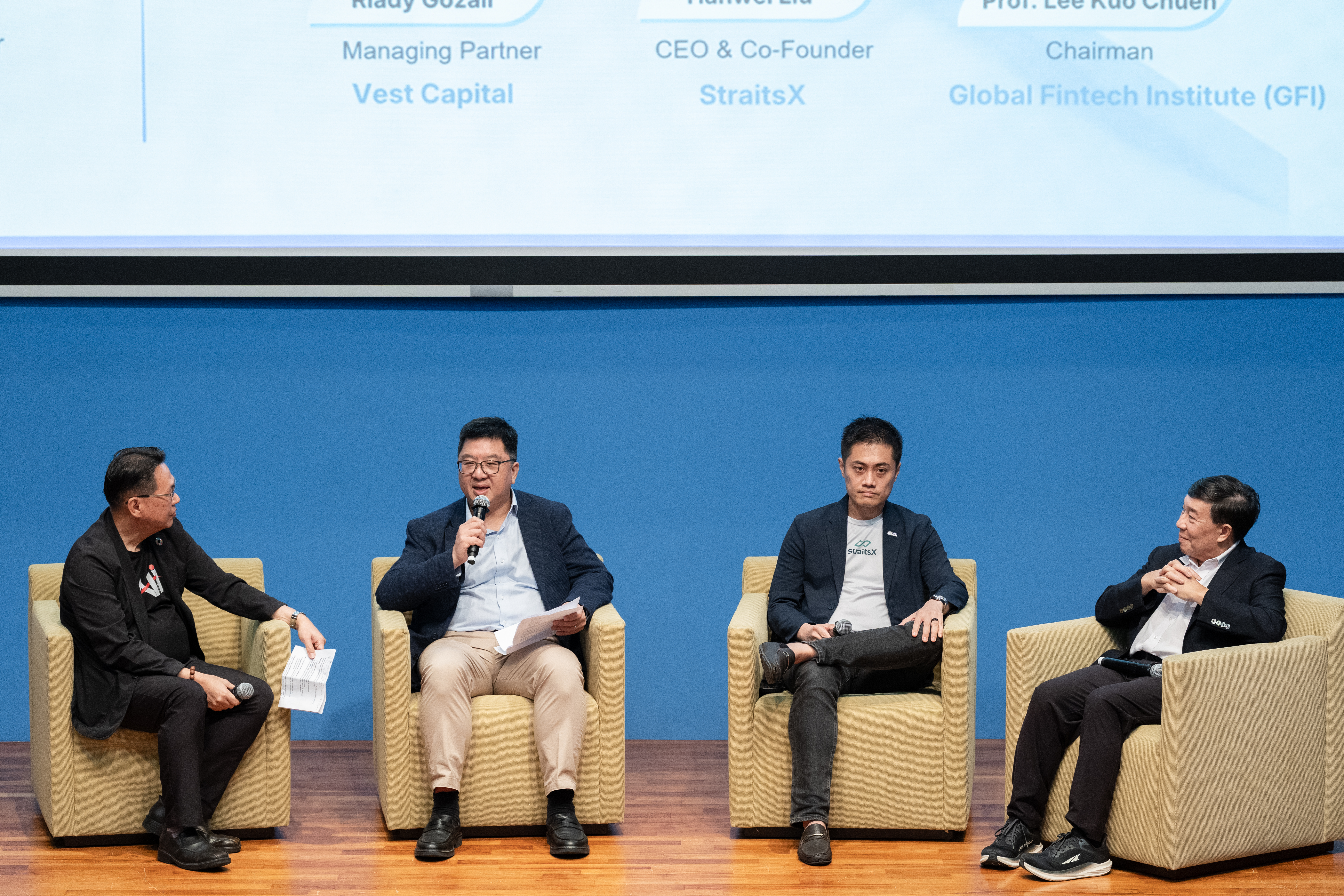
Moderated by Dr James Ong, Founder of the AI International Institute and Head of AI at the Global Fintech Institute, this panel deliberately inverted the usual framing by asking not what AI and Web3 can do for finance, but what finance can do for AI and Web3.
Mr Tianwei Liu, CEO and Co-Founder of StraitsX, explained how the firm's regulated Singapore-dollar and US-dollar stablecoins are addressing real global demand for low-cost dollar access — particularly in markets where local currencies have depreciated sharply — and noted that stablecoin-based "Bitcoin neobanks" attached to Visa or Mastercard rails are fundamentally rewriting payment unit economics. Mr Riady Gozali, Managing Partner at Vest Capital, framed AI, Web3 and finance as complementary rather than competing: AI scales intelligence, Web3 provides trust and coordination, and finance enables responsible scaling, with the next wave of value tied increasingly to intangible assets such as data, human expertise and networks. Professor Lee Kuo Chuen, Chairman of the Asia Pacific Exchange and Chairman of the Global Fintech Institute, argued for using Web3 as an immutable governance layer for AI — since AI cannot be trusted to govern AI — and offered a deliberately provocative formulation: that AI agents themselves should be made structurally inefficient in order to preserve human-centric outcomes, even as humans use AI to become more efficient. In closing, Dr Ong suggested that money is itself a reflection of human nature, and that how the financial industry deploys capital — toward responsible education, deliberate-pace AI and the right startups — will materially shape the technology's trajectory.
Panel B — The TradFi Dilemma: Security, Compliance, and the Battle for Web3's Soul
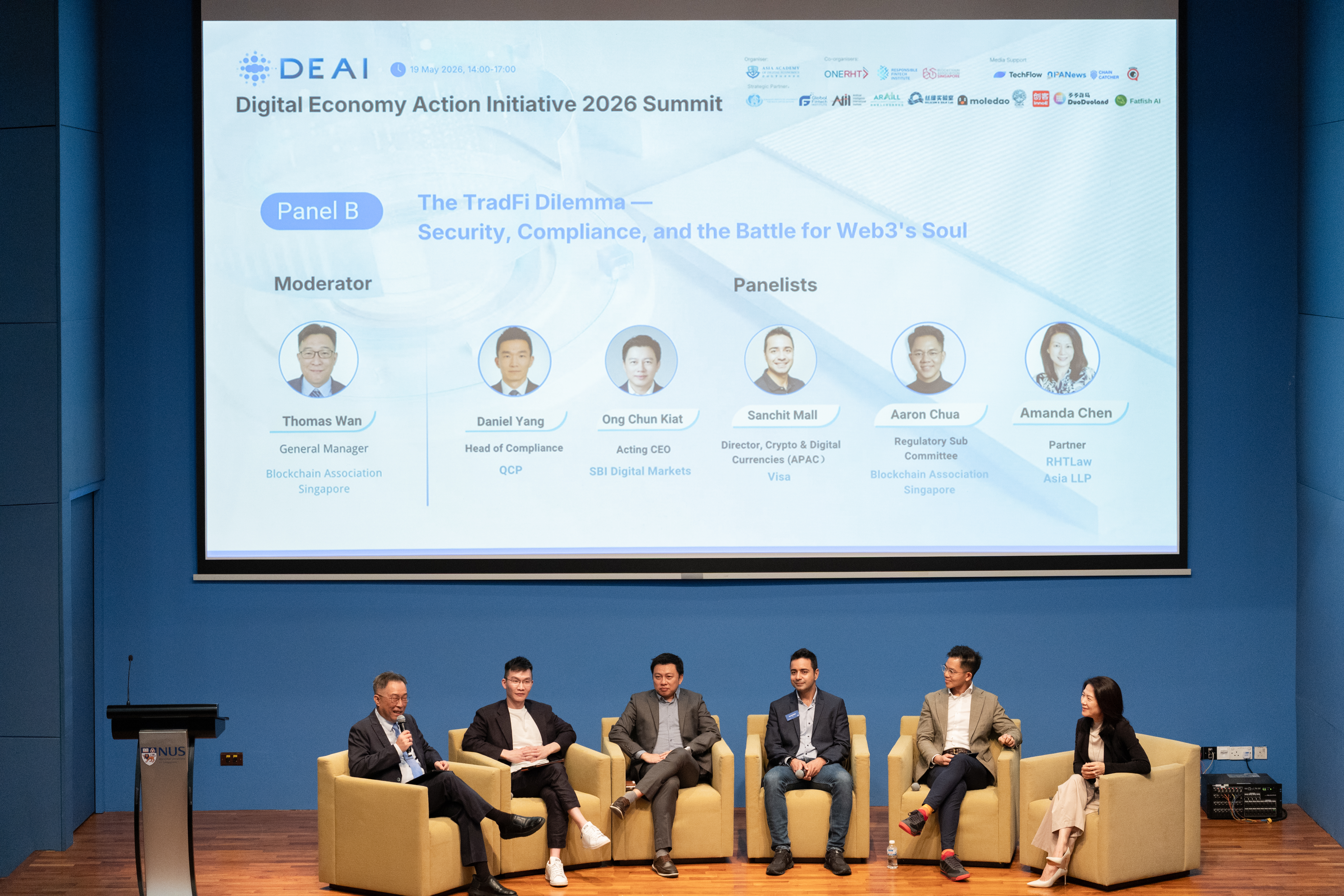
Moderated by Mr Thomas Wan, General Manager of the Blockchain Association of Singapore, this panel asked whether Web3 — once it adopts KYC, regulated custody and permissioned access — remains Web3, or merely traditional finance on blockchain rails. Mr Wan opened by situating both Web3 and AI on the Gartner Hype Cycle, noting that Web3 has already weathered major failures including the FTX collapse, while generative and agentic AI are still in an earlier, more inflated phase.
Mr Aaron Chua, Member of the BAS Regulatory Sub-Committee, declined the binary framing, arguing the goal should be to bring Web2's governance discipline into Web3 while preserving decentralisation, smart contracts and embedded compliance from the latter. Mr Daniel Yang, Head of Compliance at QCP, characterised current regulatory tightening as a natural evolution given growing institutional inflows and consumer-protection expectations, and called for proportionate, risk-based rule-making rather than blanket controls that could level down innovation. Ms Amanda Chen, Partner at RHTLaw Asia LLP, proposed a sharp test for distinguishing genuine safeguards from re-entrenchment of incumbent power: if everyone can comply with a rule, it is a safeguard; if only incumbents can afford to, the rule has become "traditional power wrapped in code." She identified unilateral exit — the ability to take self-custodied assets and leave any system without permission — as Web3's bedrock principle. Mr Sanchit Mall, Director, Crypto and Digital Currencies, Asia Pacific at Visa, identified interoperability across multiple chains, stablecoins and payment agents as the critical capability to preserve, with Visa positioning itself as a connector across these networks. Mr Ong Chun Kiat, Acting CEO of SBI Digital Markets, took a contrarian view: institutional convergence with DeFi will not happen by simply tokenising assets — DeFi infrastructure must rise to institutional standards, including client onboarding and full asset lifecycle controls, before a genuine TradFi–DeFi bridge becomes viable.
Keynote II and Panel C — Coexisting with AI, Across Every Profession
Dr Pei Sai Fan, Former Director of the Banking Department at the Monetary Authority of Singapore and a long-time FinTech educator and mentor, delivered a keynote titled "Can Humans Coexist with AI — with Alien Digital Immigrants?"
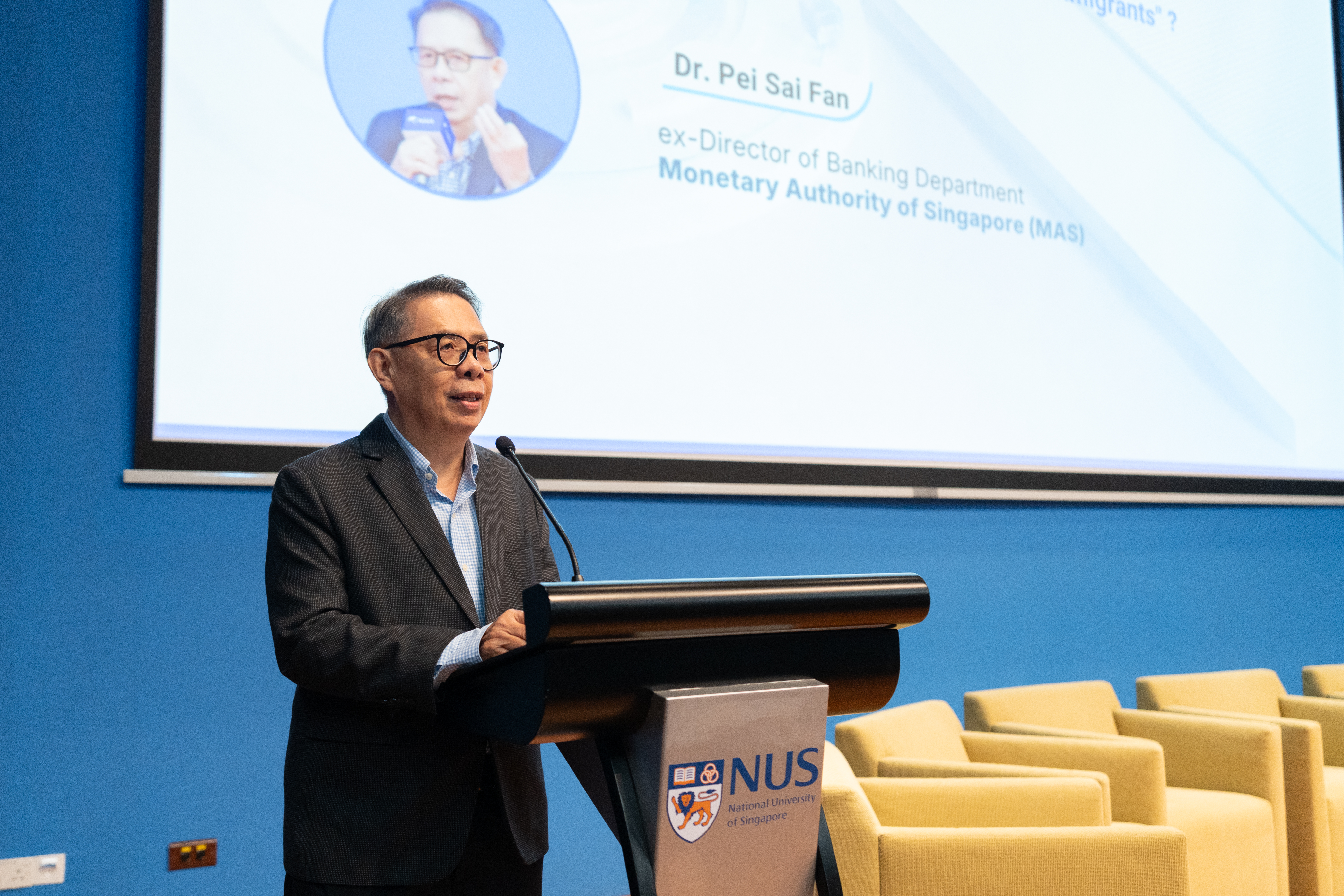
Borrowing technologist Tristan Harris's framing of advanced AI as "alien digital immigrants," Dr Pei argued that AI's most consequential disruptions are not technical but structural, touching humanity itself, social architecture, market mechanisms and education. He noted that many of today's institutions were built on an implicit assumption of scarcity that AI-driven abundance may quietly invalidate, and proposed that organisational KPIs evolve from productivity metrics alone toward measures that also capture social contribution, well-being, equity and sustainability — with education, in particular, called to remain a gatekeeper of human civilisation rather than a vocational pipeline.
Panel C — "Faster Than Thinking: AI's Challenge to Every Profession"
Panel C extended these questions into specific industries. Conducted in Mandarin, the session was moderated by Dr Chua Chee Lay, President of the Association for Research on AI in Learning and Leadership, with co-moderator Ms He Liqin, Founder of Singapore Eye and Stellaris Robotic.
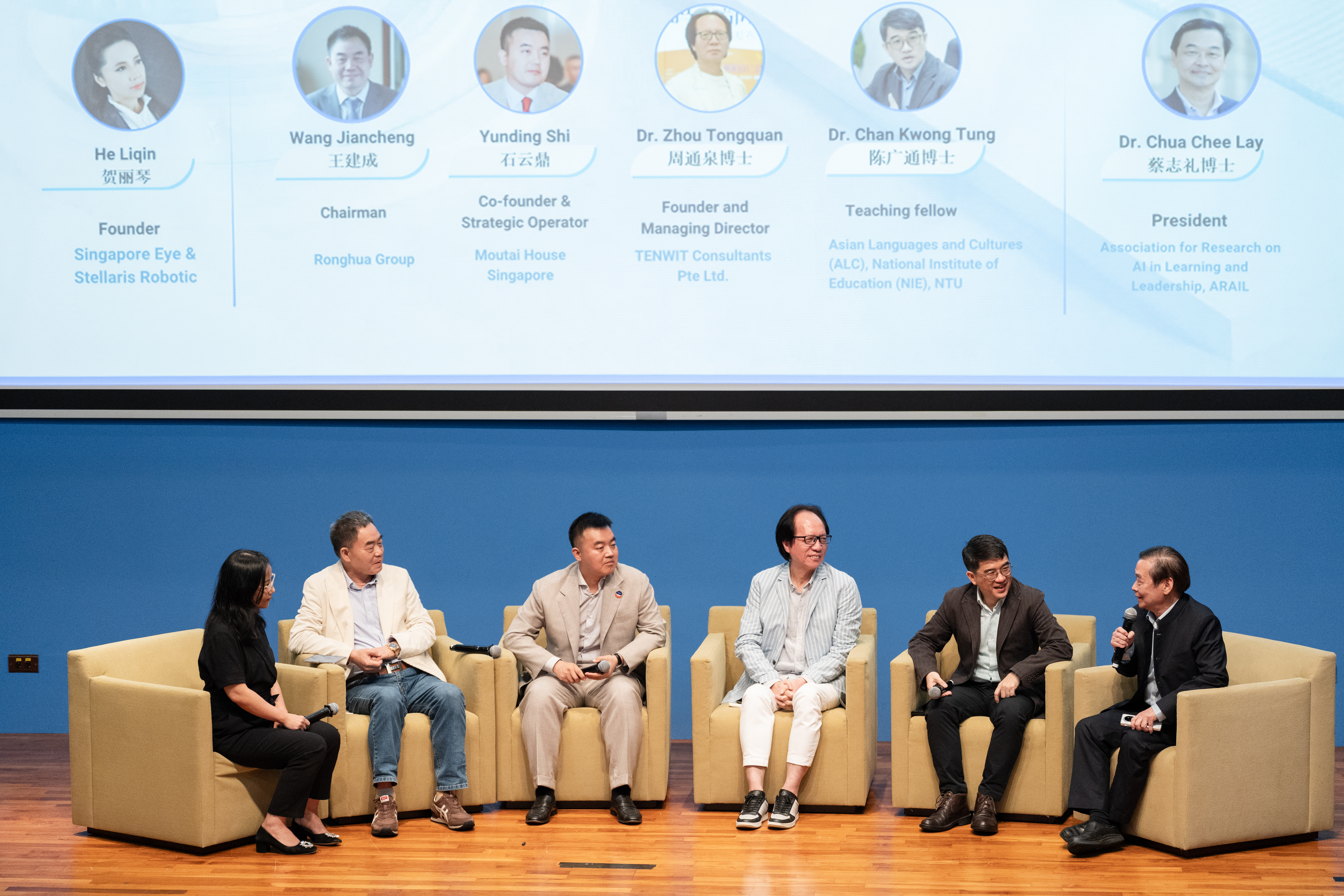
Dr Chan Kwong Tung, Teaching Fellow at the National Institute of Education, NTU, addressed the classroom paradox in which students use AI to write essays and teachers use AI to grade them; he argued that the teacher's role shifts upward on Bloom's taxonomy toward cultivating higher-order thinking. Dr Zhou Tongquan, Founder and Managing Director of TENWIT Consultants, spoke from the perspective of a Professional Engineer who carries lifetime liability on structural designs, noting that while AI dramatically accelerates engineering computation, the question of who signs — and thus carries lifetime responsibility — when AI does much of the design work remains unresolved. Mr Shi Yunding, Co-Founder of Moutai House Singapore, discussed AI's pressure on labour costs in consumer goods and services, while suggesting that as virtual interactions proliferate, demand for genuine face-to-face human consumption experiences may in fact increase. Mr Wang Jiancheng, Chairman of Ronghua Investment Group, described how AI enables a shift from intuition-driven personalisation toward data-driven consistency in retail healthcare and health management. Ms He Liqin noted that media has been one of the hardest-hit sectors and shared observations from a year of introducing humanoid robots into Singapore. In closing, Dr Chua reminded the audience that AI has not yet started a war, and that — as with road accidents — the underlying cause of most harms attributed to technology is typically human behaviour rather than the machine itself.
Awards Dinner — Honouring Contributions and Launching New Initiatives
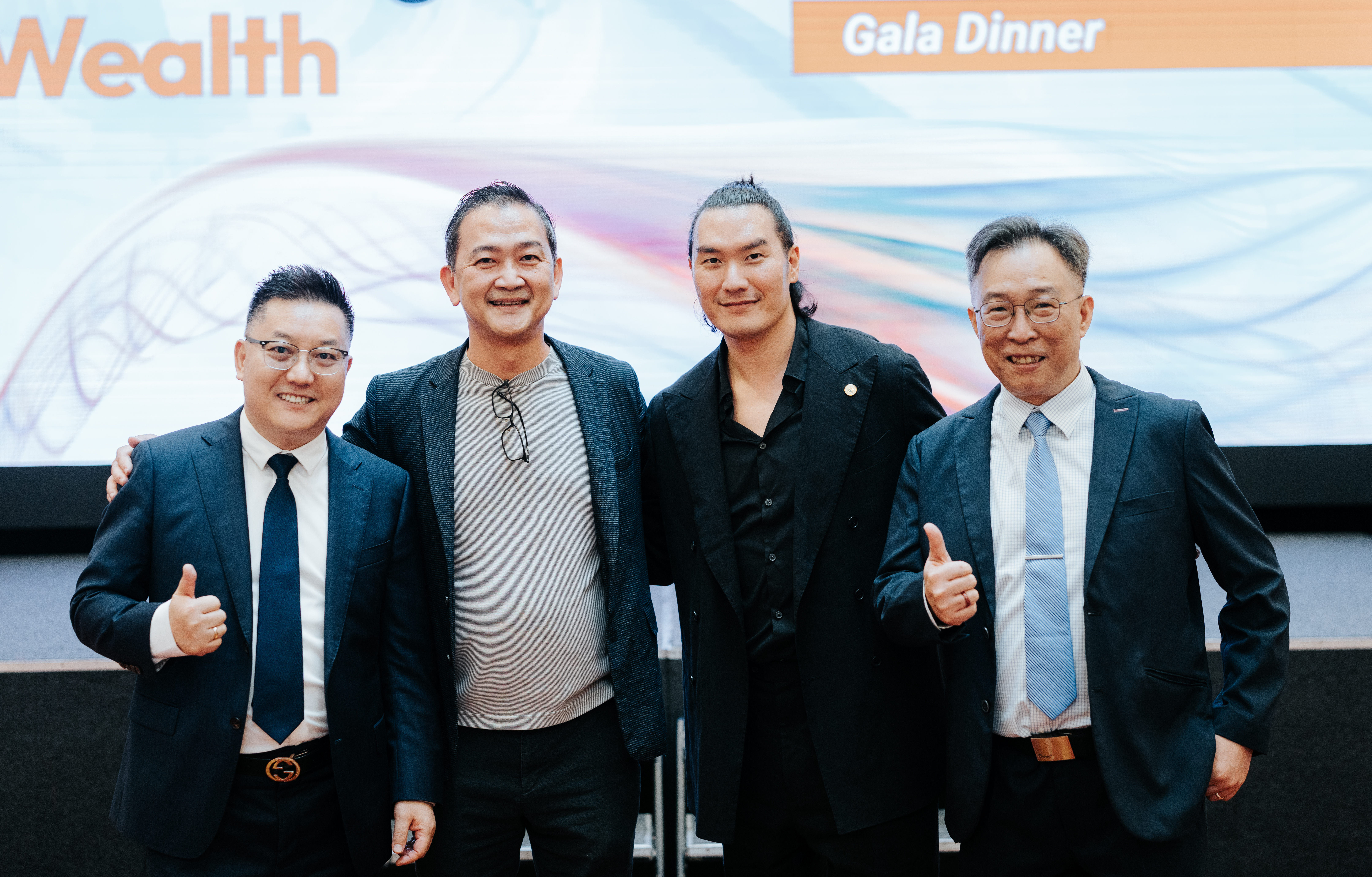
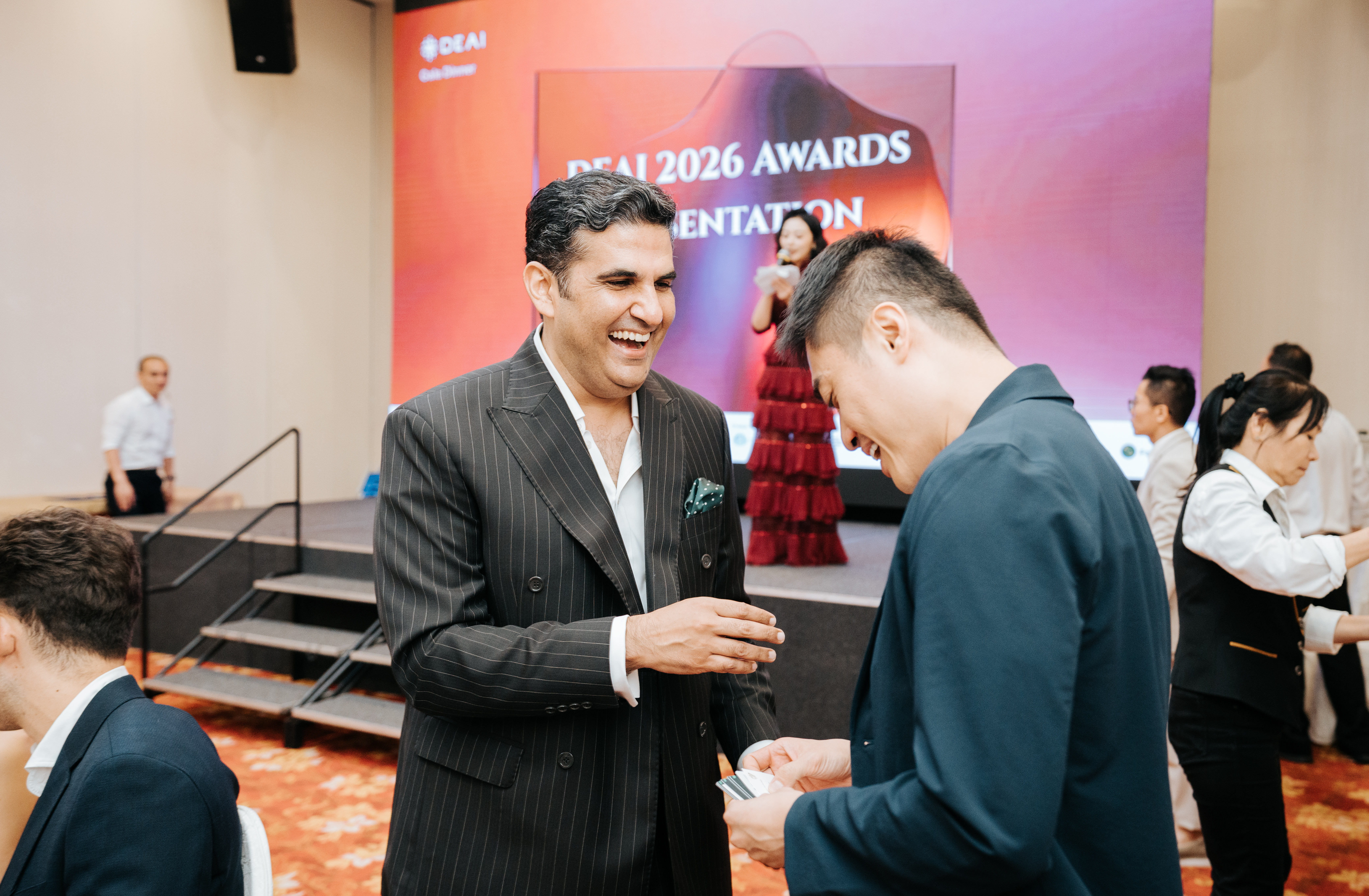
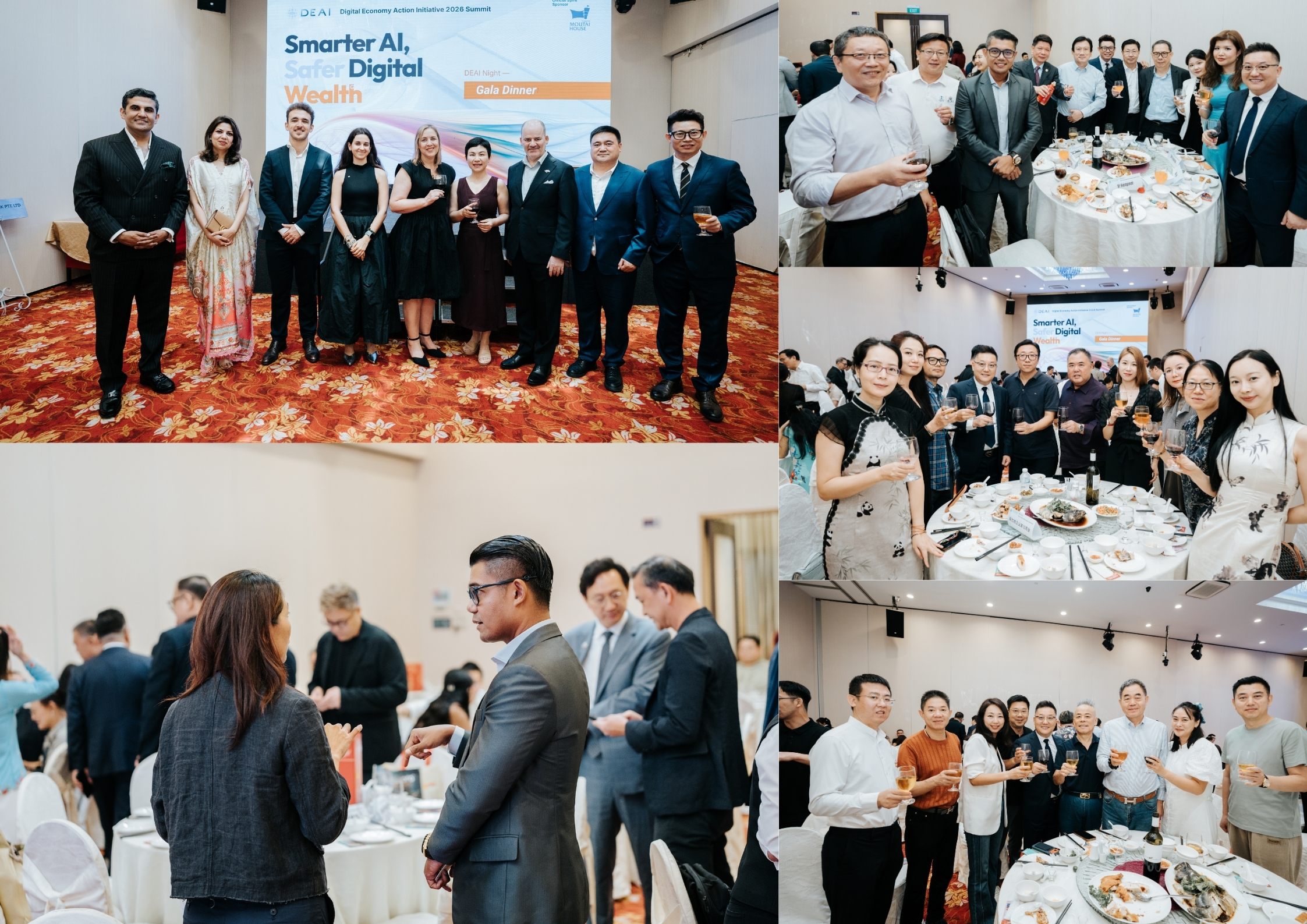
Following the day's plenary sessions, the summit continued into the evening with the DEAI 2026 Awards Dinner.
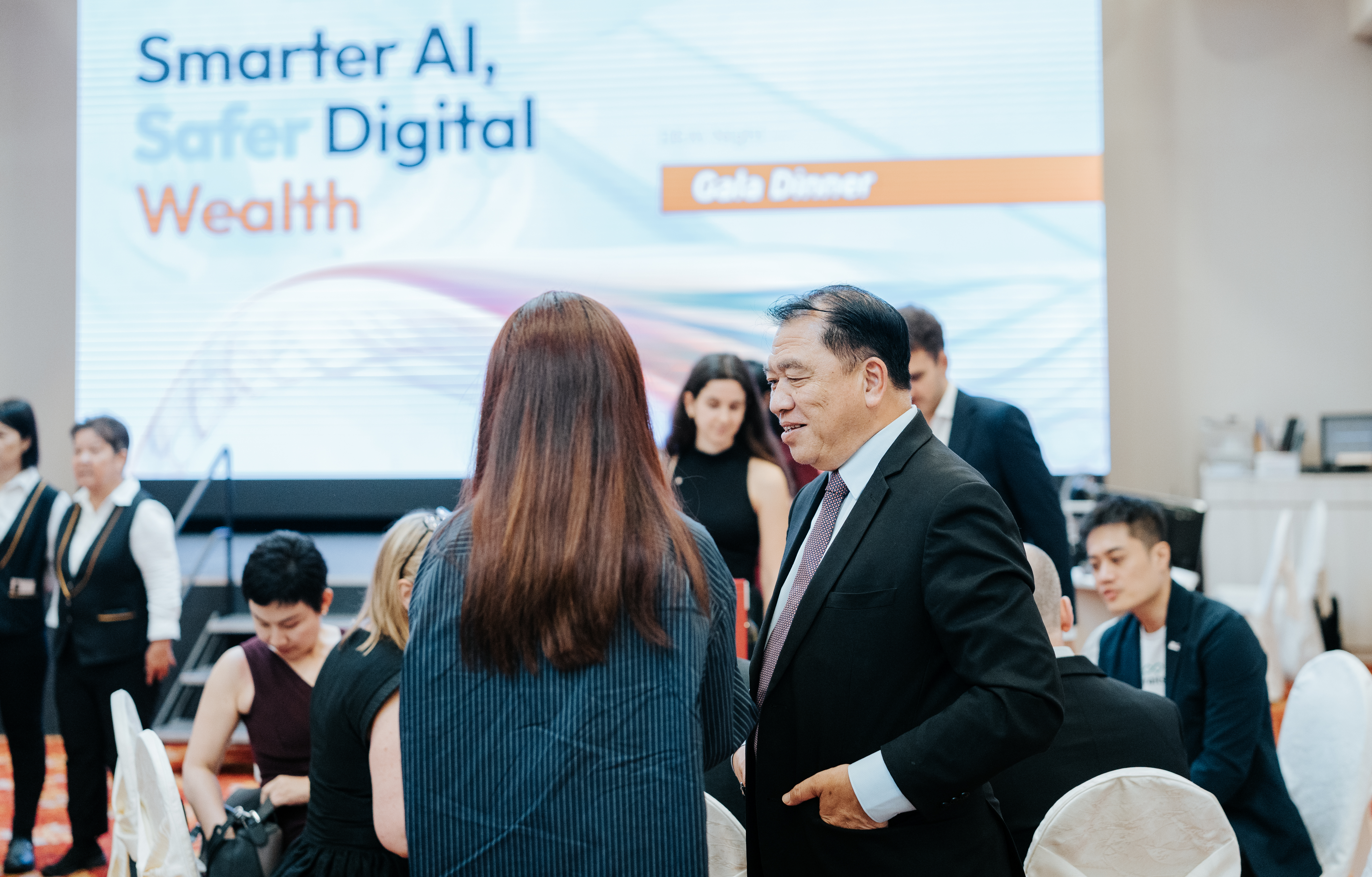
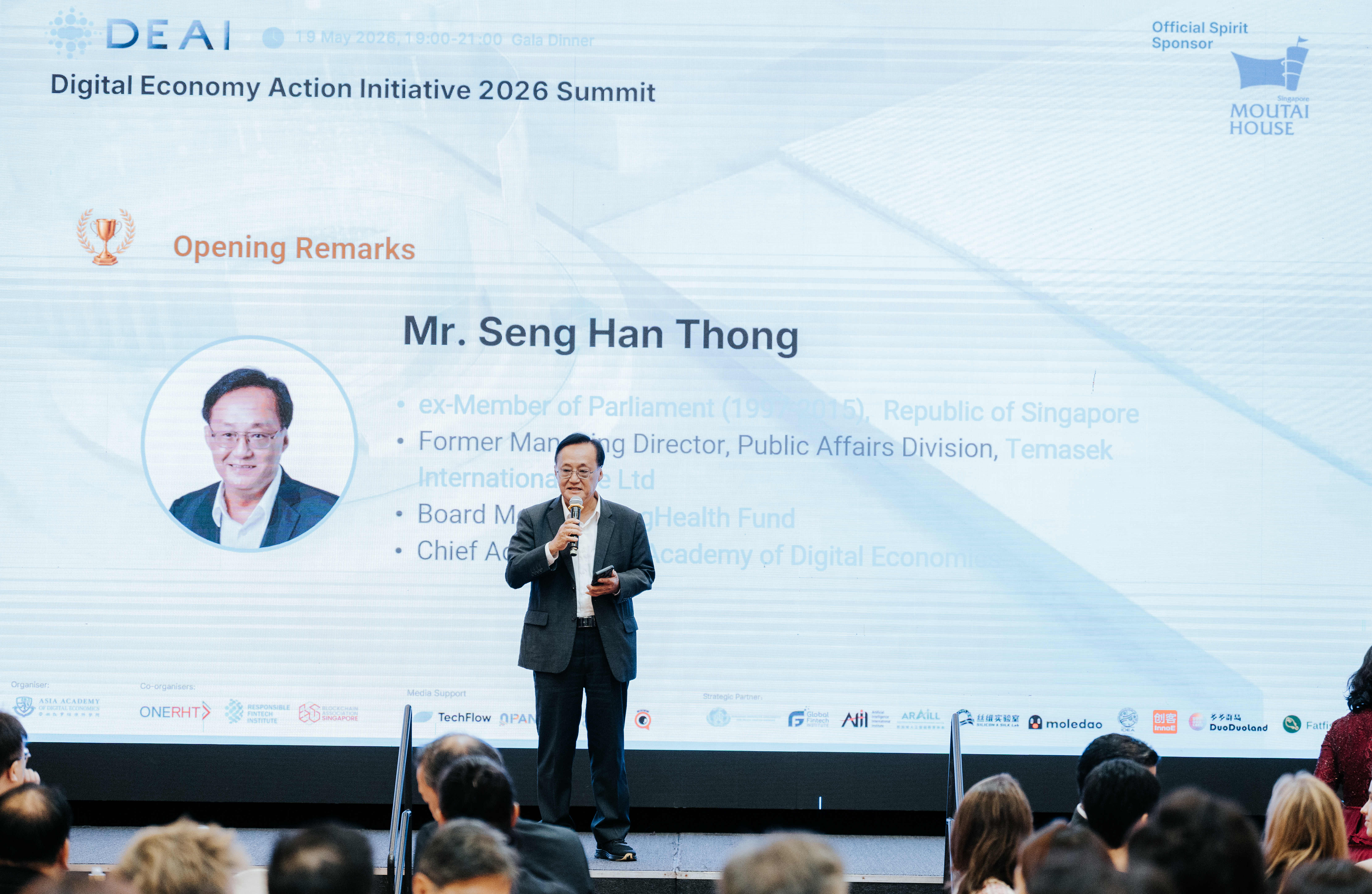
Opening remarks were delivered by Mr Seng Han Thong, who emphasised that the digital economy must be anchored in responsible innovation and human-centred values.
The evening featured the official launch of the GUAN CHAO Think Tank in Singapore, a new platform convening global expertise on the digital economy, cybersecurity, AI and global governance, jointly unveiled by Mr Seng Han Thong, Dr Neo Kok Beng, Professor Tan Poh Hwee (President of AADE), and members of the diplomatic corps.
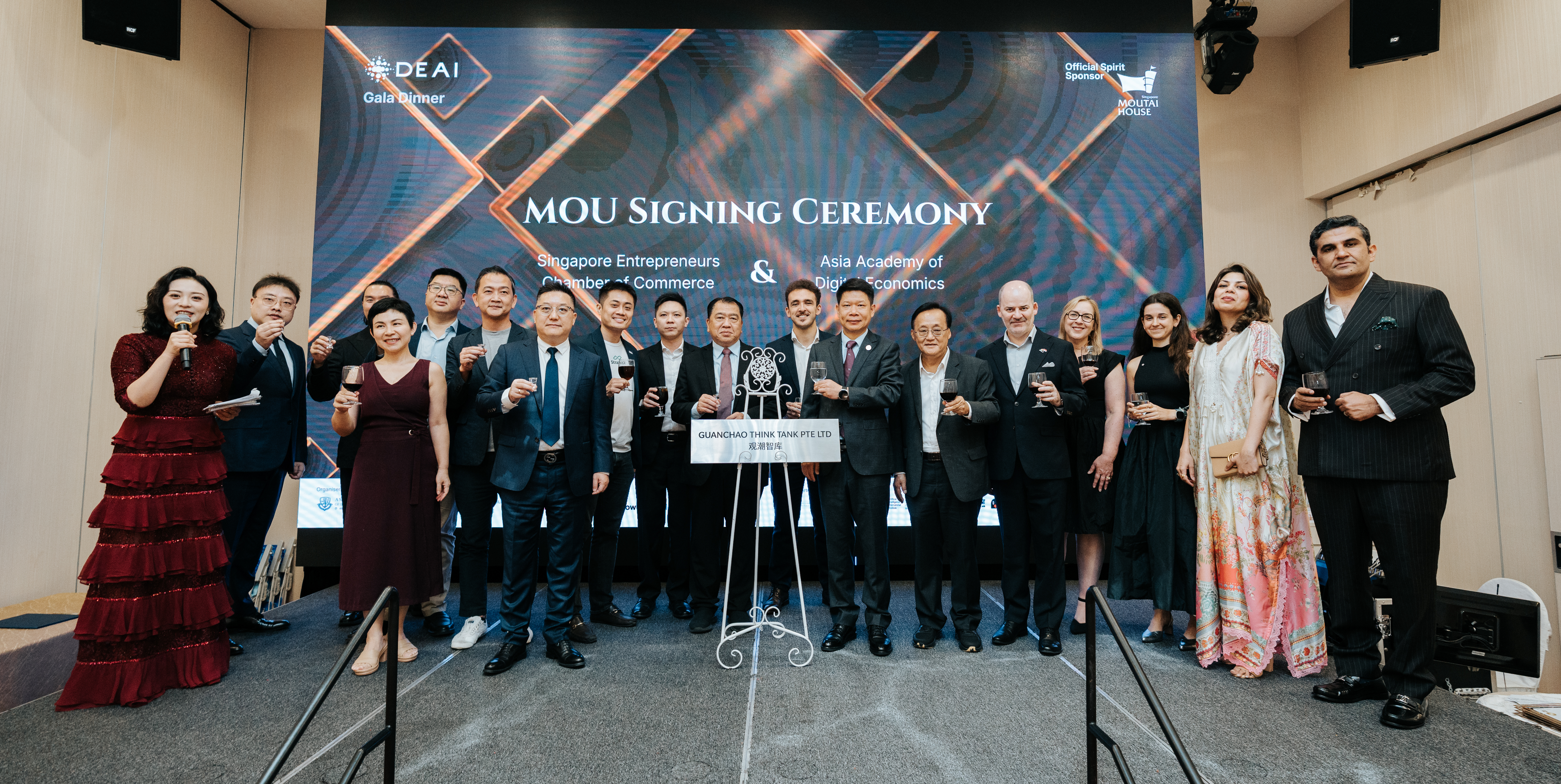
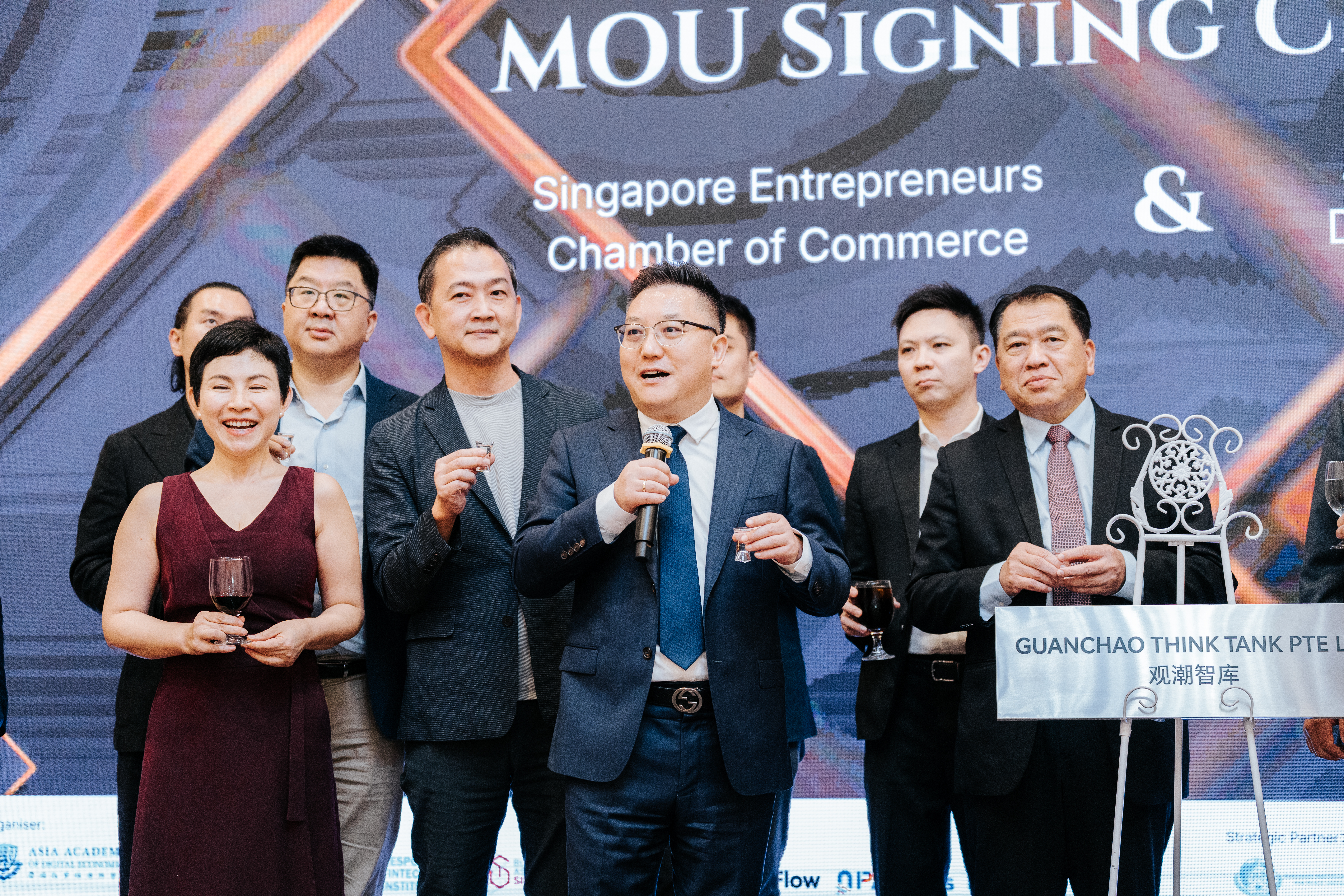
This was followed by the signing of a Memorandum of Understanding (MOU) on Digital Economy Cooperation between the Singapore Entrepreneurs Federation and AADE, covering enterprise internationalisation, digital transformation and AI talent development.
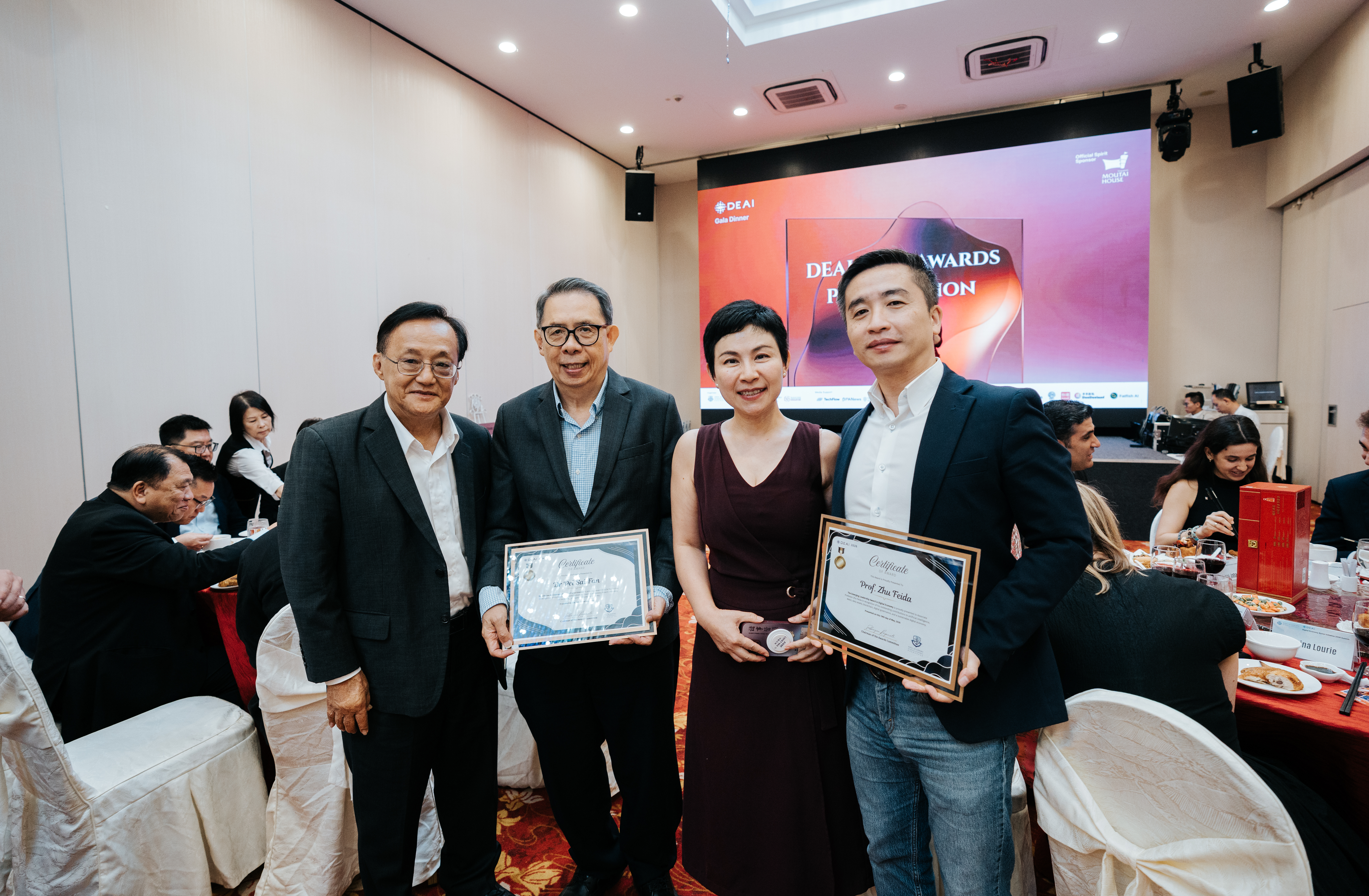
The dinner also hosted the DEAI 2026 Awards Presentation, with Dr Neo Kok Beng conferring honours on individuals and institutions recognised for their outstanding contributions to the region's digital economy ecosystem.
Closing — Toward a Smarter, Safer Digital Future
Across keynotes, panels and the evening's launches, a common thread ran through DEAI 2026: that the central question of the AI era is not how powerful the technology becomes, but whether the institutions, governance frameworks and human judgements around it can keep pace. From unified telemetry-based AI governance to self-healing Web3 security, from stablecoin-enabled financial inclusion to the redesign of education for higher-order thinking, the day's discussions converged on a single message — as technology becomes smarter, the responsibility to make society safer and more human becomes correspondingly greater. That responsibility, the summit reaffirmed, can only be met through sustained dialogue across borders, sectors and disciplines.