

The "New Battlefield" of Digital Currency
Recently, Lianhe Zaobao published a special feature titled "Digital RMB or Stablecoins: Will China Integrate or Choose One?", providing an in-depth analysis of the current global digital currency competition landscape and China's strategic choices. Facing the rapid rise of global stablecoins and the accelerated layout of digital assets in Europe and America, the contest in the "new battlefield of monetary sovereignty" has reached a fever pitch.
In this discussion concerning the future international financial landscape, Lianhe Zaobao gathered authoritative voices from top academic institutions. The interviewees included:
- Zhu Feng, Dean of the School of International Relations at Nanjing University
- Shen Hong, Researcher at the Institute of New Structural Economics at Peking University
- Tang Ke, Associate Professor of Economics at Tsinghua University
- Deng Chao, CEO of HashKey Capital
- Pei Sai Fan, Guest Professor at the Singapore University of Social Sciences
- Liu Jingzhu, Head of Research at the Asian Academy of Digital Economics (AADE)
Institutional Compatibility Over Underlying Technology
In the feature, scholars reached a consensus: on the path of RMB internationalization, the digital RMB and stablecoins are not absolutely "either-or," but can be advanced in parallel. Liu Jingzhu, Head of Research at AADE, directly addressed the core pain points. She pointed out that while China leads in underlying technology, the compatibility of the current institutional framework is the ultimate key to the digital RMB going international.
Liu Jingzhu sharply noted that China's current systems restrict the closed-loop commercial application of the digital RMB overseas:
- Payment Restrictions: Overseas enterprises can primarily only use e-CNY for payments related to current accounts (e.g., import/export trade).
- Capital Limitations: It cannot be used for capital account expenditures.
- Liquidity Issues: It cannot be freely converted into other foreign currencies in many scenarios.
"No one wants to accept it, because if you accept it, you can't use it freely."
This conclusion by Liu Jingzhu reveals the direct impact of the lack of application scenarios and freedom of capital flow on overseas users' acceptance.
A Forward-Looking Policy: "Whitelisted Exchange" Channel
To overcome this dilemma, Liu Jingzhu proposed highly constructive breakthrough suggestions representing AADE's policy vision:
- Establishing a trade-based "Whitelisted Exchange" channel to allow foreign businesses to convert digital RMB into local currencies at appropriate times.
- Prioritizing pilot programs in global financial hubs including Singapore, the UAE, and Hong Kong.
- Focusing on bulk commodity export enterprises through preset quotas and compliance whitelists.

Navigating Geopolitical Financial Games
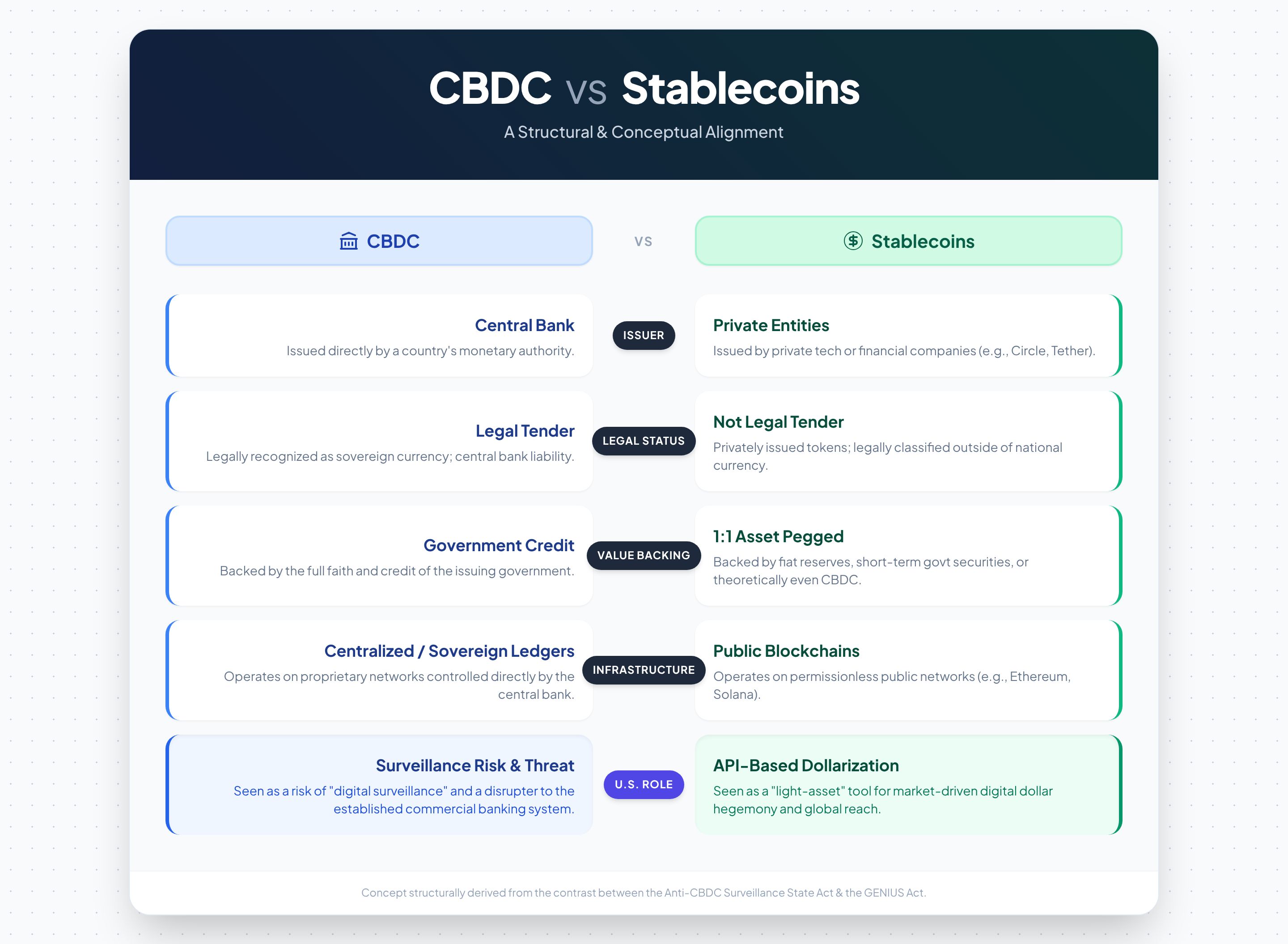
The report also focused on geopolitical shifts. As mentioned by Professor Pei Sai Fan, the United States is attempting to build itself into the "global crypto capital" through the "Genius Act" and other legislative means, consolidating dollar hegemony via USD-pegged stablecoins.
Facing this acceleration, China must not fall into a passive position. The Lianhe Zaobao report corroborates the urgency of exploring "institutional compatibility". Moving forward, AADE will continue to play its role as a regional digital economy think tank, providing regulatory agencies with macro-policy suggestions that combine academic depth with practical value.